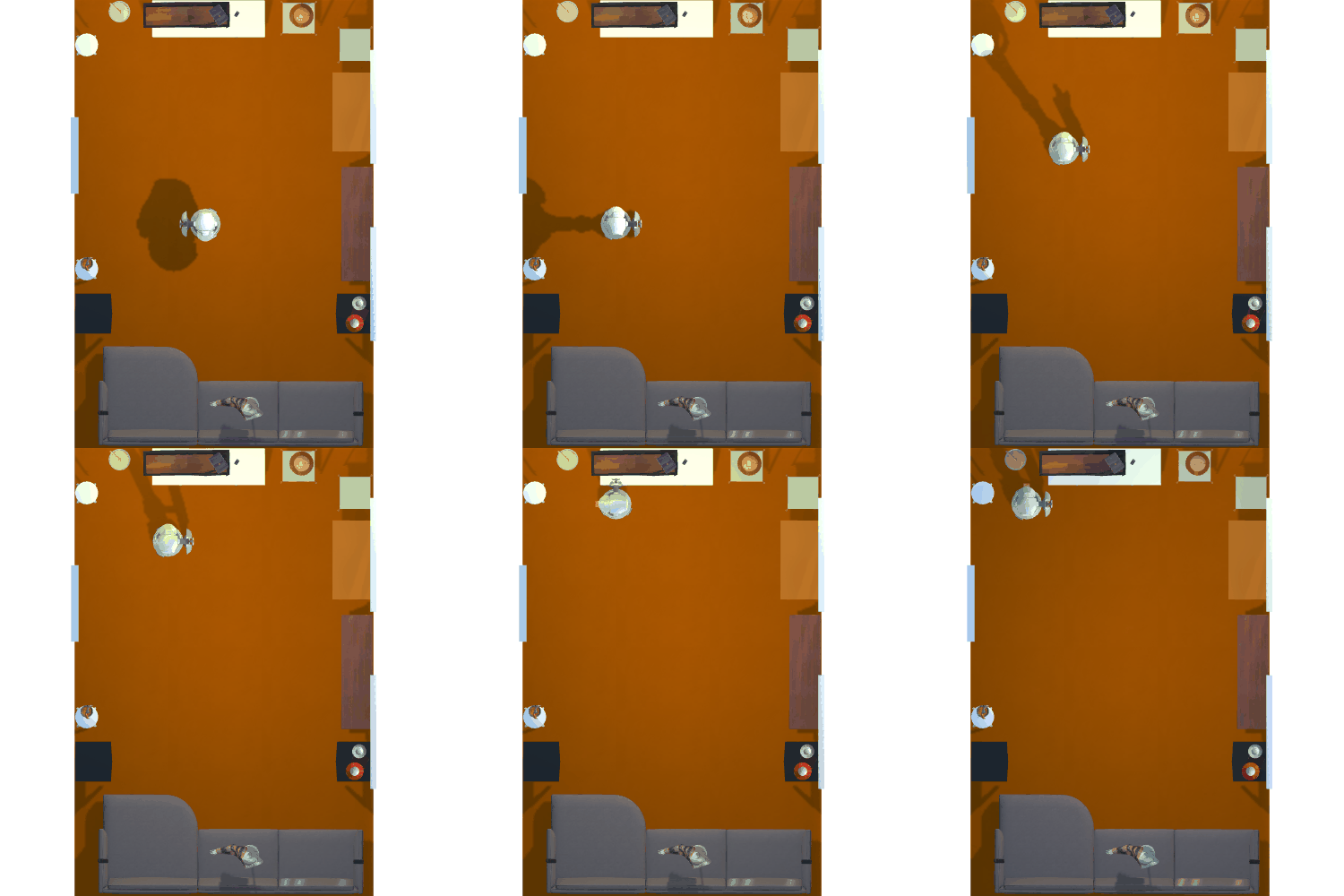
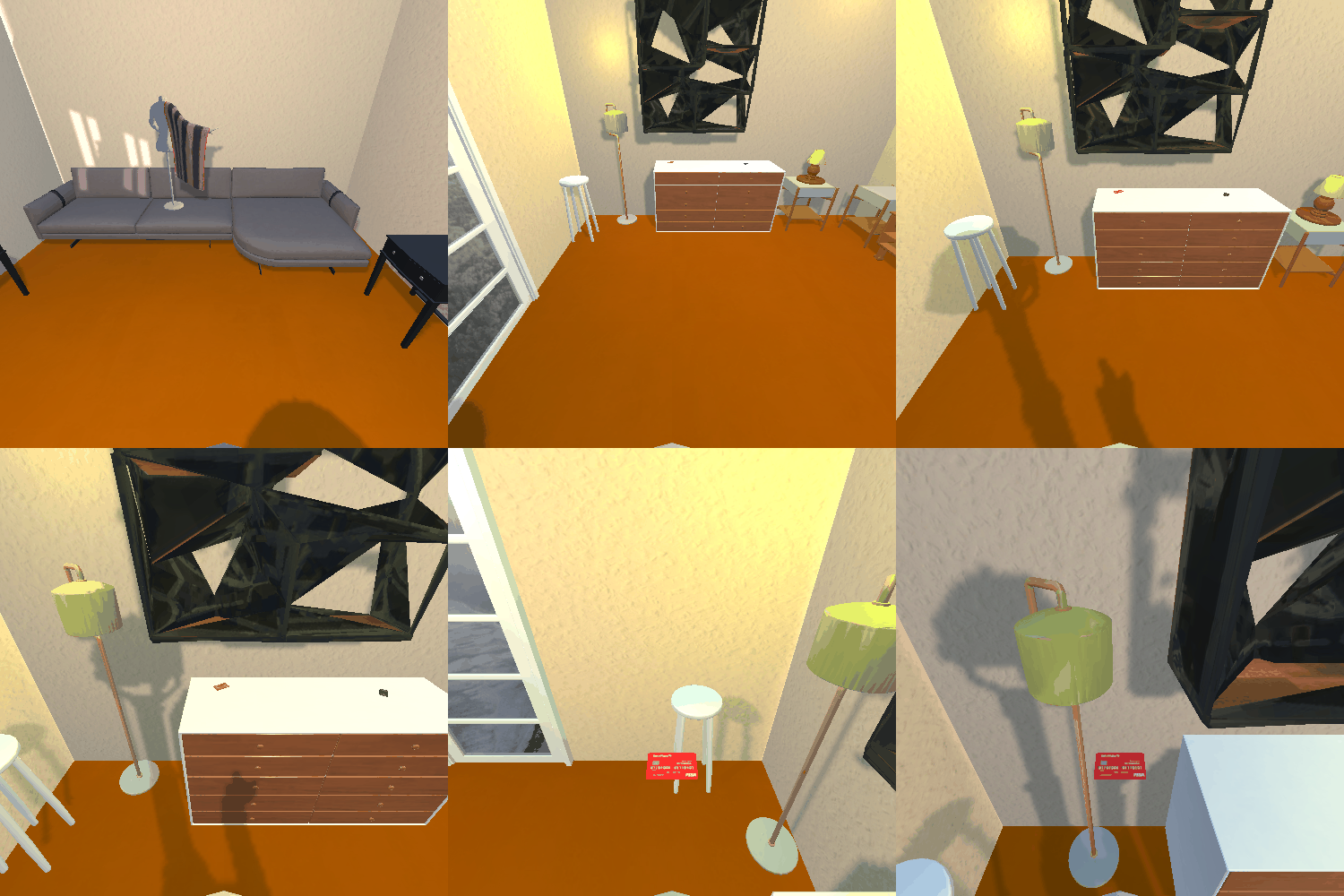
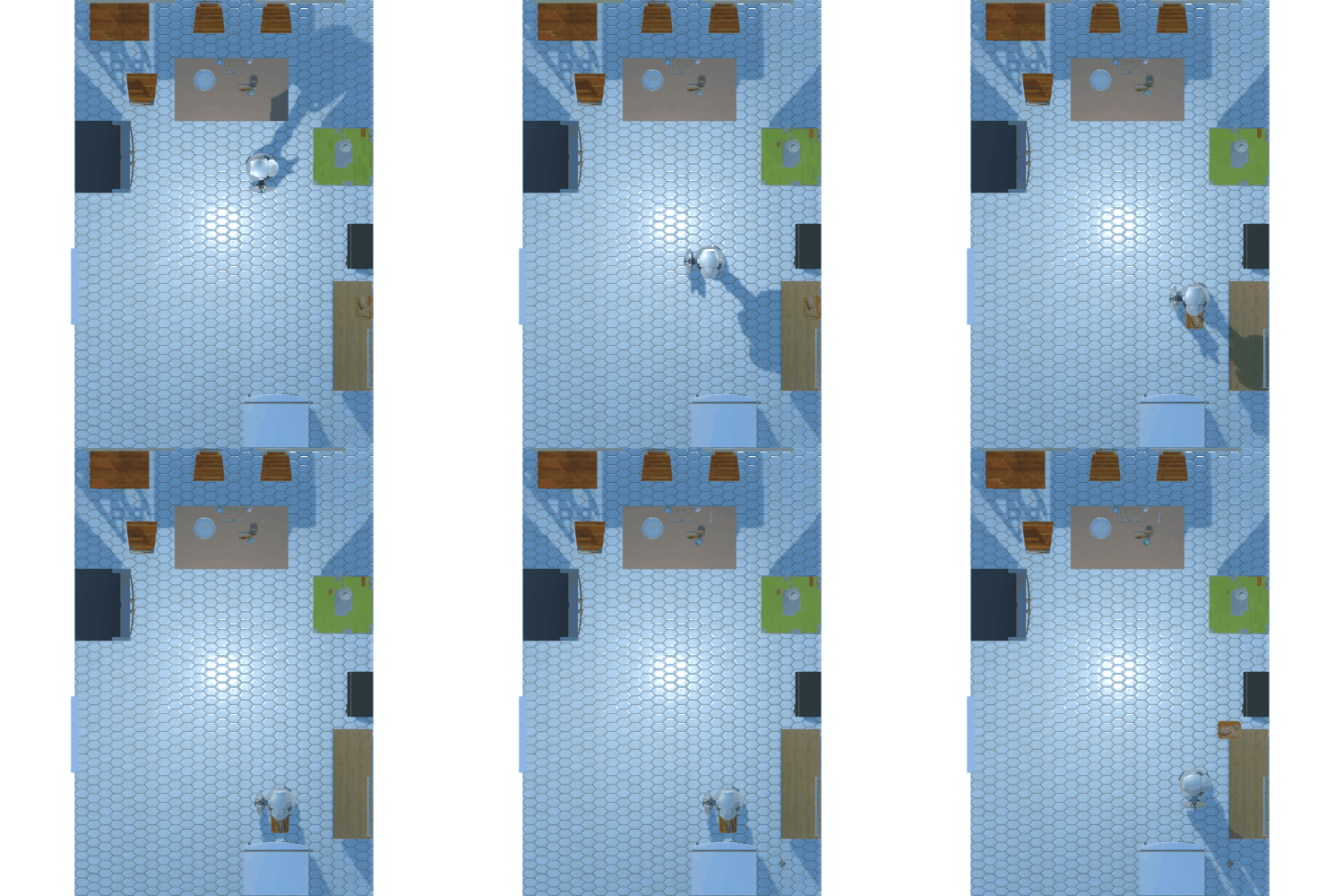
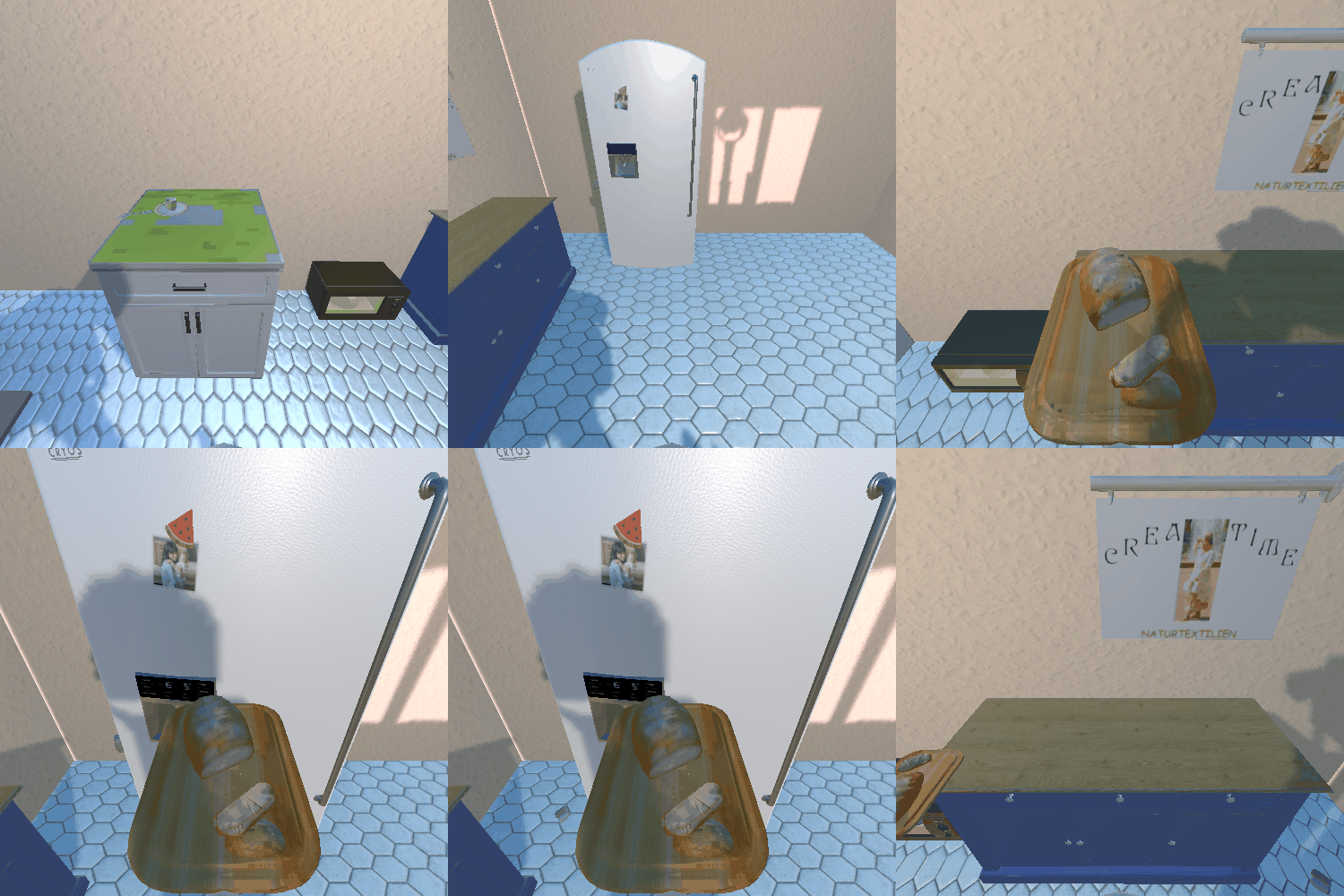
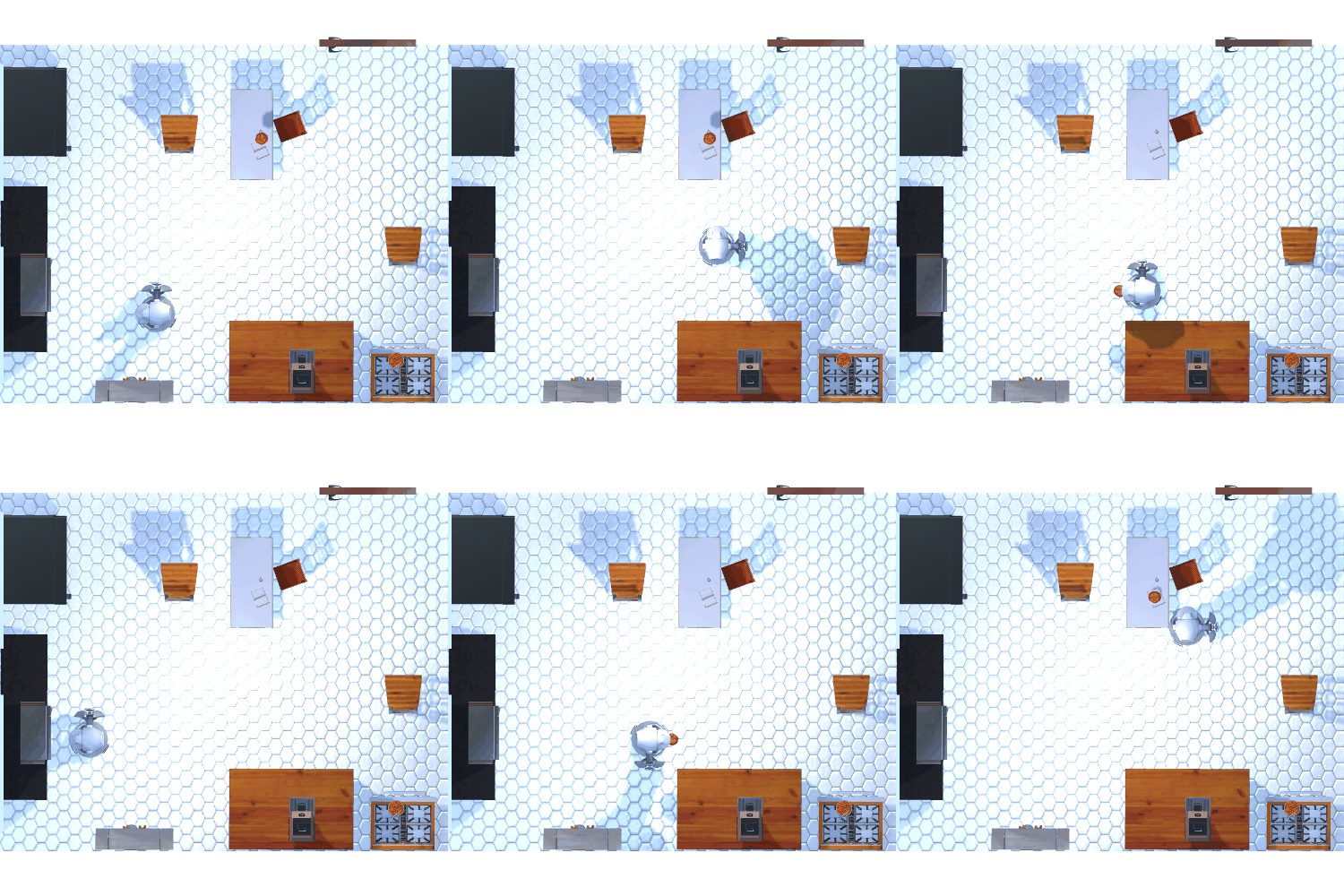
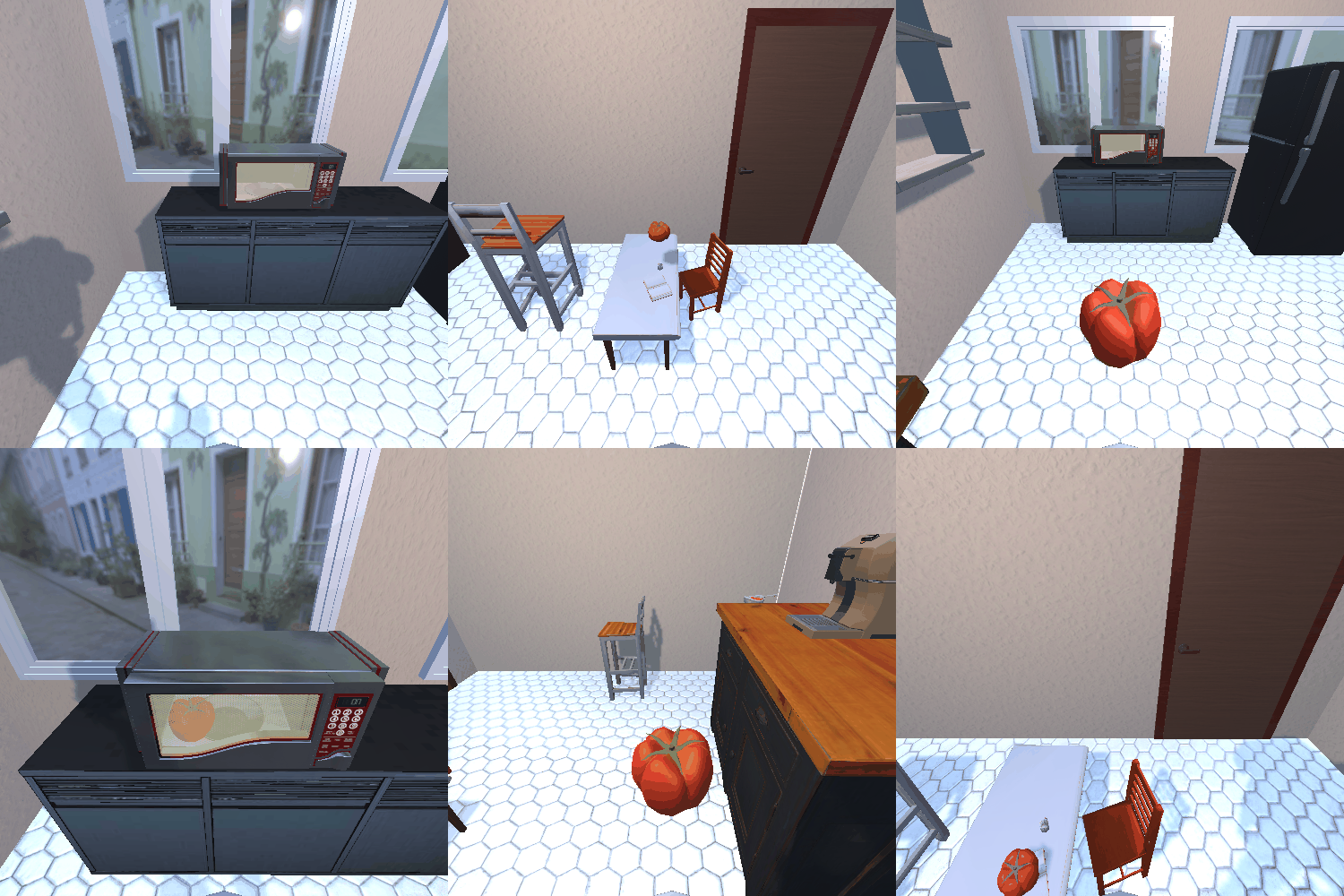
Overview
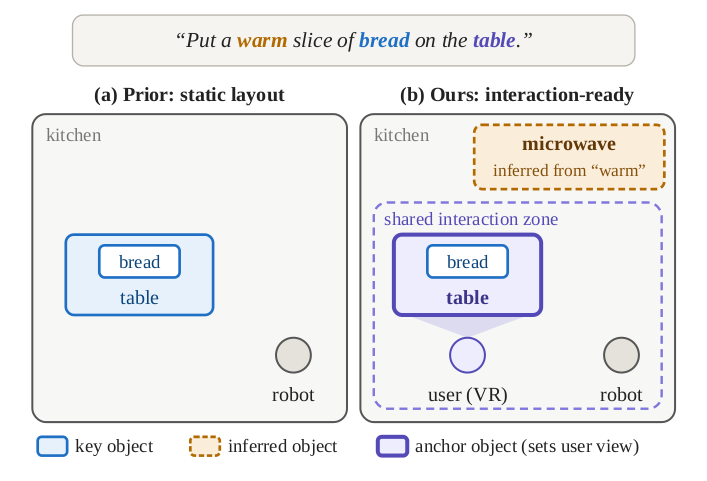
Abstract
Language-driven 3D scene generation typically produces
static layouts that neglect interaction requirements, often omit-
ting task-implied objects and leaving user placement unde-
fined. We introduce a unified framework for interaction-ready
3D environment generation that connects language under-
standing, spatial construction, and immersive virtual reality
(VR) human–robot interaction (HRI). Our pipeline integrates
three core modules: a Language-Driven Scene Representation
(LDSR) that builds a scene graph of explicit and task-implied
objects; a VR-Aware Object Role Classification (VR-ORC)
module that classifies object roles, including the anchor; and
Plan2Place, a reinforcement-learning placement policy that
arranges objects under relational, geometric, navigability, and
affordance constraints. The user’s viewpoint is then initialized
near the anchor, and the scene is deployed in VR with
visual and haptic feedback. On ALFRED-based tasks, VR-
ORC improves key- and inference-role F1 by 34–51 points
over a rule-based reading of the LDSR scene graph, but its
gain on the anchor role, which determines the viewpoint, is
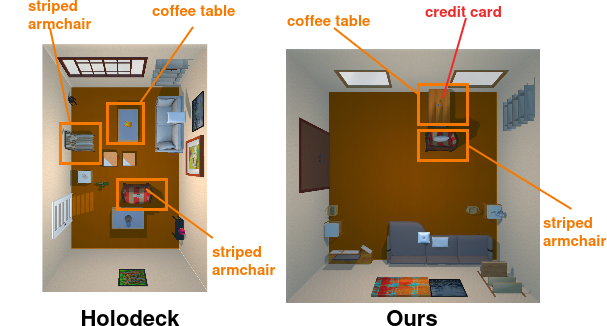
small (1.9–2.9 F1 points). The generated scenes contain every
required object for 72%–96% of instructions per task category,
against 4%–20% for Holodeck. On constraint sets from two
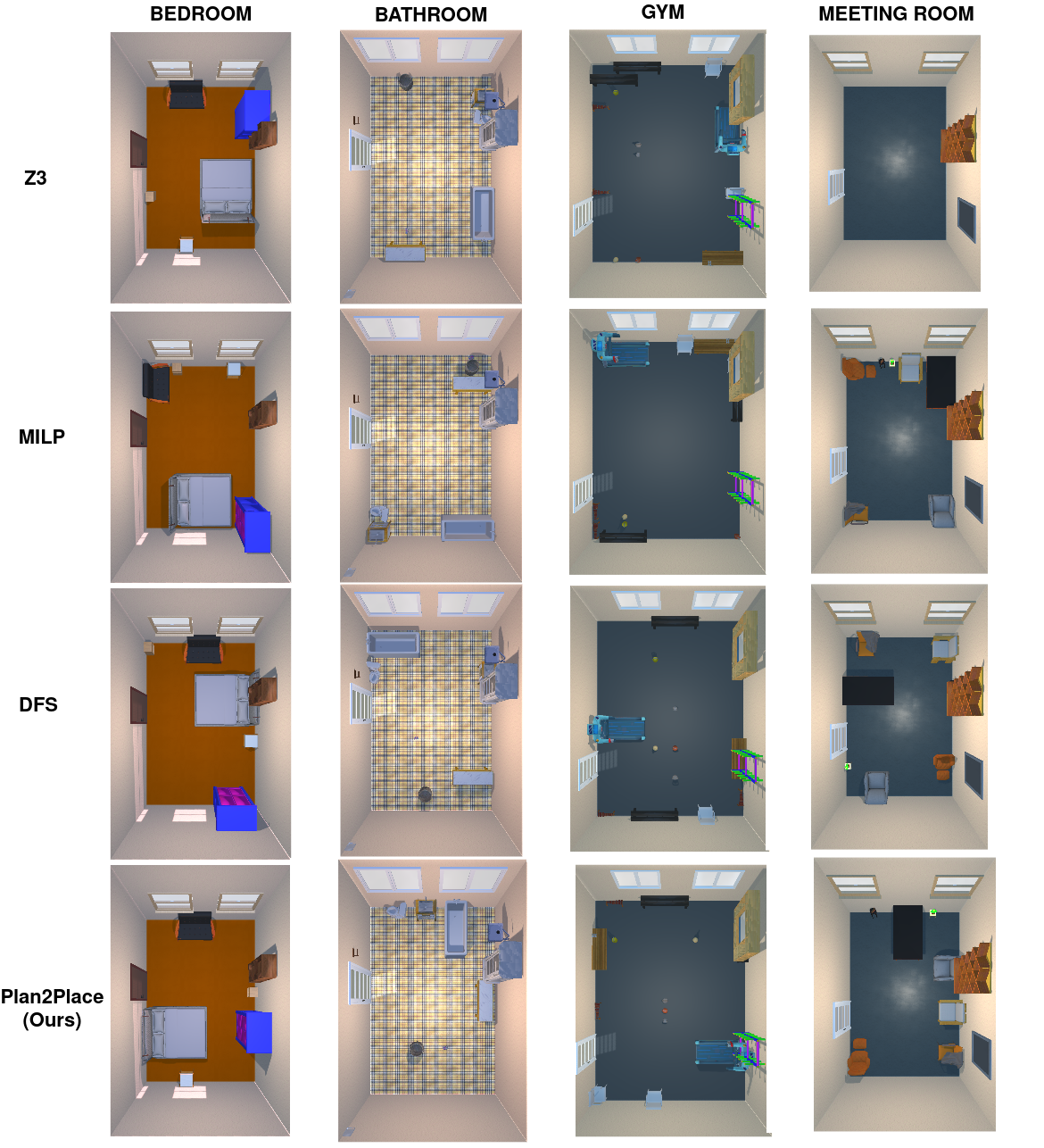
held-out LLMs, Plan2Place places and keeps reachable more
key objects than DFS, MILP, and Z3, at the cost of lower
scene-level completeness than DFS or MILP on some sets. A
user study of an earlier version of Plan2Place and a VR check
of viewpoint initialization complement these results. These
results suggest that interaction requirements can be built into
scene generation rather than appended post hoc